Herniated or Bulging Disc
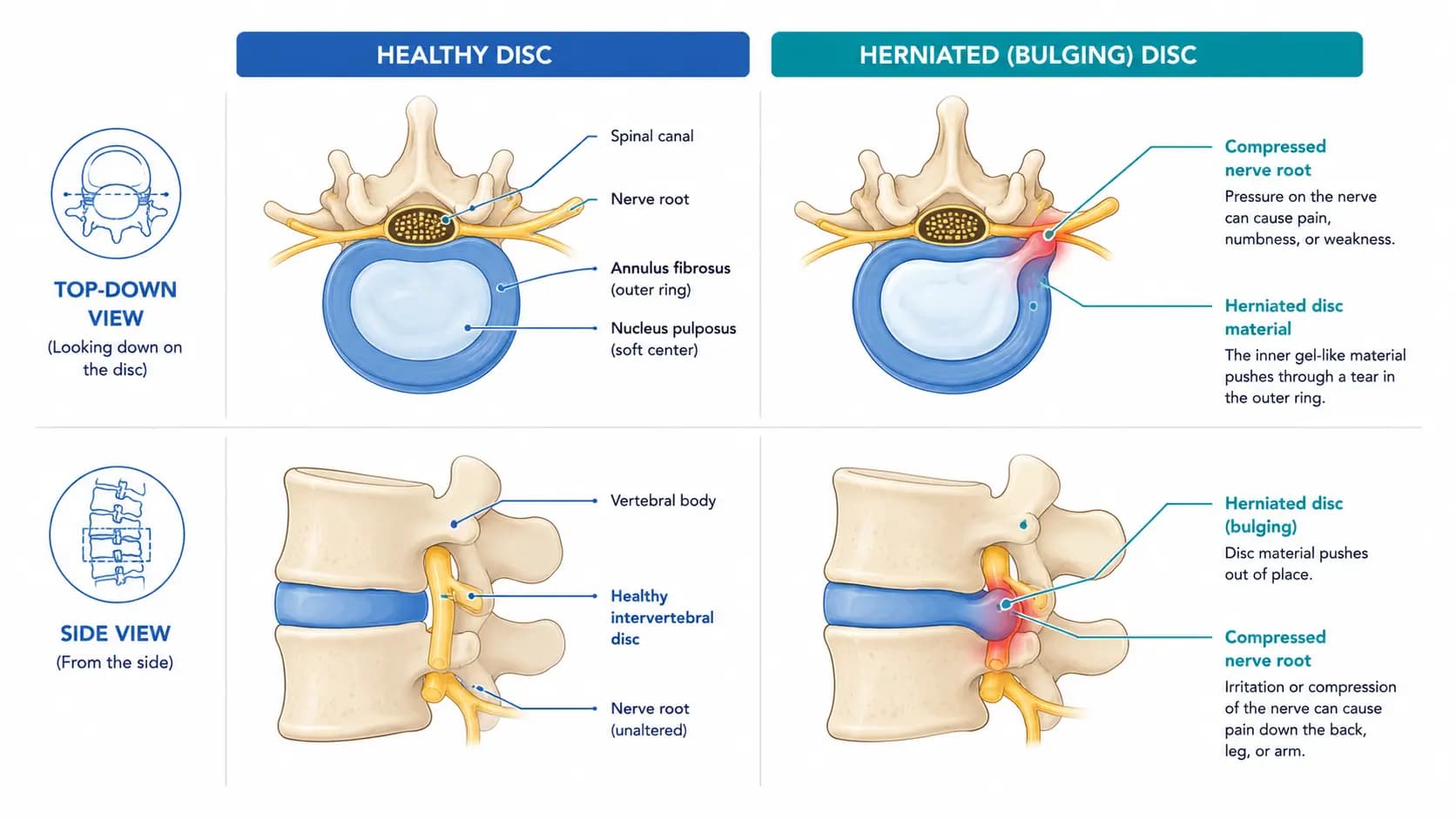
A herniated or bulging disc happens when the soft inner core of a spinal disc pushes against or through its outer ring, often irritating a nearby nerve root.
Most disc-related pain improves without surgery when treatment is targeted to the right level and the right structure.
Diagnosis-first care for herniated or bulging disc
Physician-led evaluation, image-guided procedures when indicated, and insurance-friendly scheduling across three Houston-area clinics.
Understanding herniated or bulging disc
Spinal discs sit between each pair of vertebrae and act as shock absorbers. With age, repetitive load, or injury, the outer ring of a disc can weaken, allowing the softer inner material to bulge or herniate. When the disc pushes on a nearby nerve root, it produces the radiating pain pattern most patients associate with sciatica or cervical radiculopathy.
Not every disc bulge causes pain. Imaging often shows disc changes in people without symptoms, so the exam matters as much as the MRI. Our job is to determine whether the disc finding actually explains your pain or whether another structure — facet joint, sacroiliac joint, muscle — is the real driver.
The natural history is favorable. Most herniations resolve or stabilize over weeks to months, and interventional care can shorten that timeline by reducing inflammation around the irritated nerve.
Most disc problems improve without surgery, but certain features warrant urgent evaluation.
- Loss of bowel or bladder control or saddle numbness
- Progressive weakness in a leg or arm
- Foot drop or difficulty lifting the toes
- Severe pain not relieved by any position
What patients usually describe
- Sharp, electric pain radiating into the arm or leg
- Numbness or tingling in a specific dermatomal pattern
- Pain that worsens with sitting, coughing, or sneezing
- Weakness in a specific muscle group
- Loss of reflex on exam
- Difficulty walking or climbing stairs
- Night pain that disrupts sleep
What we look for in evaluation
- Age-related disc degeneration
- Heavy lifting with rotation
- Repetitive bending or vibration exposure
- Sudden trauma or fall
- Genetic predisposition
- Smoking and metabolic factors that reduce disc nutrition
Diagnosis comes before any procedure.
Diagnosis combines a focused history, dermatomal sensory testing, motor and reflex exam, and provocative maneuvers. MRI is the imaging study of choice when needed. Selective nerve root or epidural injections can serve both diagnostic and therapeutic roles when the source is unclear.
Pattern history, neurologic exam, review of imaging.
Targeted MRI or selective injections when the level is unclear.
Tiered plan emphasizing the natural healing window.
Treatments we offer for herniated or bulging disc
Each option below is matched to a confirmed pain generator. We start with the least invasive effective approach and only escalate when the diagnosis supports it.
Your first appointment
The first visit focuses on confirming whether the disc is the true pain generator and at what level. Plan for a thorough exam, review of imaging, and a discussion of how interventional care fits with conditioning and time.
What recovery typically looks like
Most patients see substantial improvement over six to twelve weeks with appropriate care. Activity modification, conditioning, and follow-up are essential to durability and to reducing recurrence.
Conditions patients with herniated or bulging disc often ask about
Questions about herniated or bulging disc
Do I need surgery for a herniated disc?
Most patients do not. Surgery is reserved for progressive weakness, intractable pain, or specific red-flag situations. Many disc herniations improve substantially with non-surgical care.
Will the disc heal on its own?
Many herniations shrink or stabilize over time. Treatment aims to manage pain and inflammation through that healing window.
Can I exercise with a disc herniation?
Most patients can and should remain active. The right exercises depend on the level and pattern of pain, which we discuss at your visit.
Ready to find the source of your pain?
Share a few details and our team will reach out to confirm a time that works with your schedule and your insurance.
Request an appointment
Tell us about your herniated or bulging disc symptoms and preferred clinic. We will confirm the next available appointment options.