Regenerative Medicine (PRP)
Platelet-rich plasma (PRP) therapy uses your own blood to deliver concentrated growth factors into damaged joints, tendons, or soft tissue in hopes of promoting healing.
PRP is considered an investigational treatment in most clinical settings. While some patients benefit, the evidence is still developing, and outcomes vary. It is not a substitute for surgery and is typically self-pay.
What this treatment is and why it is used.
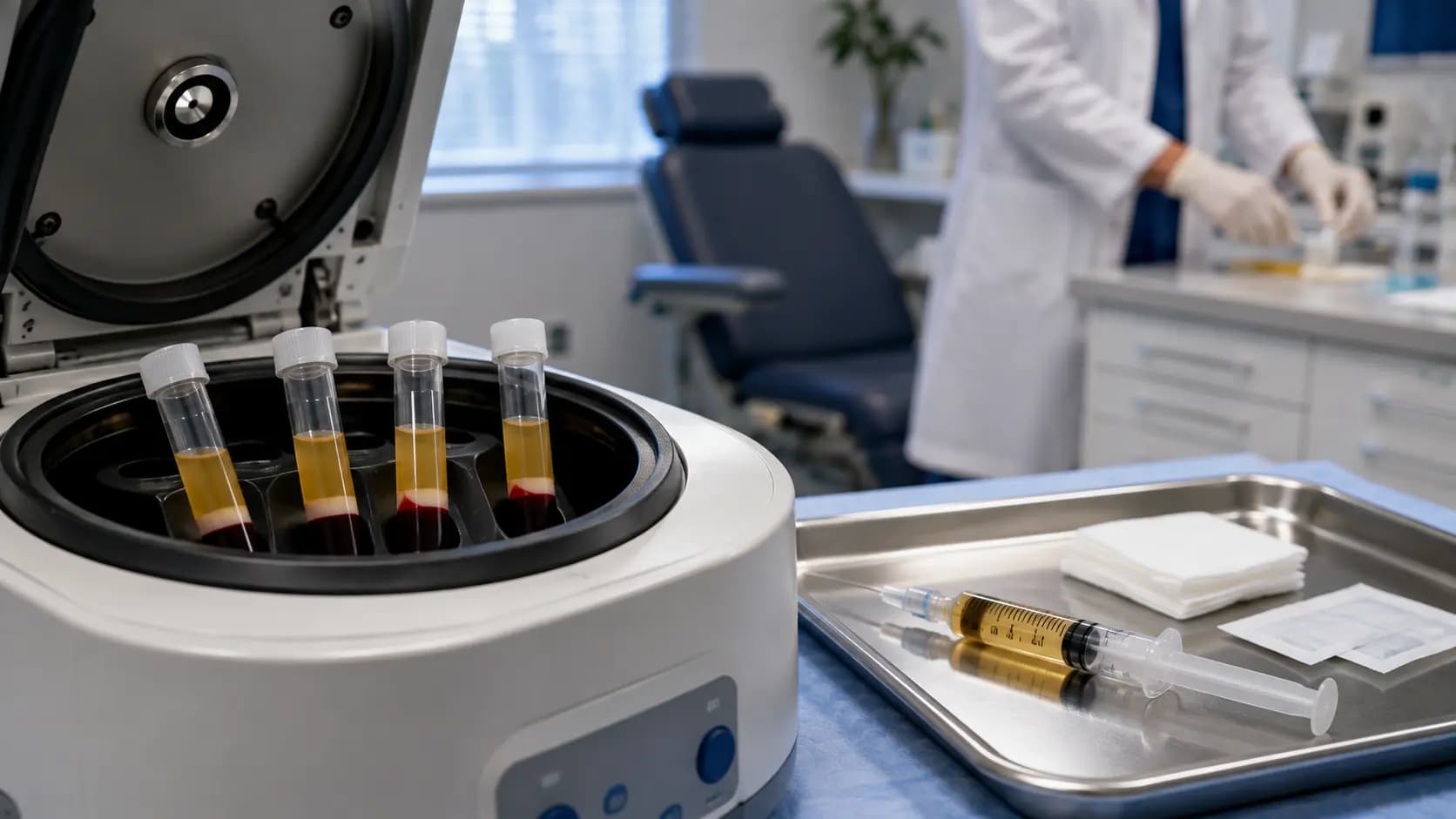
Platelet-rich plasma (PRP) is a concentrate of your own blood platelets and growth factors. The process begins with a small blood draw, which is then spun in a centrifuge to separate and concentrate the platelets. The resulting solution is then injected into the area of injury or degeneration under image guidance.
The theory behind PRP is that the growth factors in platelets may stimulate healing in damaged tissue — particularly in tendons, bursae, and osteoarthritic joints. However, PRP remains investigational for most orthopedic uses. Clinical evidence is mixed, and results vary considerably between patients and between different conditions. Some patients report meaningful improvement; others experience little change.
Because PRP is not proven for most applications and is generally not covered by insurance, it is typically offered only after you have tried conventional treatments and understand that the evidence is still being developed. We will discuss candidacy honestly during your consultation, including what the current evidence supports and what remains uncertain.
Our team starts with a clinical evaluation to confirm the pain generator before any procedure.
The procedure, step by step.
Every step is designed for accuracy and comfort. You will know what to expect before, during, and after.
A small volume of blood is drawn from your arm, similar to a routine lab draw.
The blood is placed in a centrifuge to spin and concentrate the platelets and growth factors, creating the PRP solution.
The skin over the injection site is cleaned and sterilized. A local numbing agent is applied to numb the area.
Using ultrasound or fluoroscopy for guidance, the physician advances the needle to the target tissue and injects the PRP solution into the injured area.
You are monitored briefly and given activity restrictions and aftercare instructions before discharge.
Before, during, and after the appointment.
Do not take anti-inflammatory medications (NSAIDs) for 48 hours before your appointment, as they may reduce platelet function. Tell us about any blood thinners or clotting disorders. Ensure you are well hydrated and have eaten normally.
The blood draw takes a few minutes. While the blood is being centrifuged, you will wait. The actual injection, after local numbing, takes only a few minutes. You may feel pressure but not sharp pain.
Mild swelling, soreness, or localized discomfort is common for several days. We recommend avoiding strenuous activity of the treated area for at least one week. Many patients report gradual improvement over weeks to months, though some see little change.
What recovery typically looks like.
Most patients resume light daily activity within a day or two. We recommend avoiding heavy exertion of the treated area for at least one week to allow initial healing. Ice can be used for soreness. The potential benefit of PRP develops gradually, and if improvement occurs, it typically emerges over weeks to months rather than immediately. Follow-up imaging or repeat injections may be discussed based on your individual response.
Candidacy is determined after a clinical evaluation.
PRP is investigational, and the evidence supporting it remains limited and mixed for most orthopedic conditions. It is not appropriate as a first-line treatment and should only be considered after conservative care and established interventions have been optimized. Candidacy is determined after a thorough evaluation including imaging, symptoms, prior treatments, and a candid discussion about the uncertainty of outcomes. We will not recommend PRP unless we believe it is a reasonable option given your clinical situation and your understanding that the evidence is still developing.
Medicare and major insurance accepted.
Platelet-rich plasma therapy is generally not covered by Medicare or commercial insurance plans. PRP is typically a self-pay procedure. Our team will confirm the cost with you before scheduling so there are no surprises at the time of your visit.
See accepted insurance plansCommon pain patterns we pair with regenerative medicine (prp).
Procedures that often work alongside this one.
Questions patients ask about this procedure.
How is PRP different from other injections I might have?
Cortisone reduces inflammation; hyaluronic acid supplements joint lubrication. PRP aims to stimulate healing through growth factors, but the evidence for PRP is less established. Each works through a different mechanism, and your physician will discuss which approach, if any, makes sense for your situation.
Why isn't PRP covered by insurance if it's a real treatment?
Insurance plans cover treatments with strong clinical evidence supporting their use. PRP remains investigational for most conditions, meaning the evidence is still being gathered. Some conditions and some practices have more data than others, but overall, PRP is not yet considered standard of care, which is why it is typically self-pay.
What if I don't see improvement after PRP?
That is possible. Outcomes vary, and some patients experience little to no benefit. If PRP does not help, we will discuss alternative treatment options, which may include repeat conventional injections, physical therapy intensification, or referral to surgical consultation if appropriate.
Can PRP be repeated?
Yes, repeat PRP injections are sometimes considered if initial response is partial or if symptoms return. However, we reassess candidacy and evidence with each repeat to ensure it remains a reasonable approach for your situation.
Talk to a board-certified pain specialist.
We see new patients by referral across our Pasadena, Baytown, and Katy clinics. Our team will verify your insurance and walk you through the next step.
- Board-certified, fellowship-trained physician
- Medicare and major insurance accepted
- Three Greater Houston locations
- Bilingual staff and direct phone access
Request a regenerative medicine (prp) consultation
Platelet-rich plasma drawn from your own blood and injected under image guidance into an injured joint or tendon.