Upper and Middle Back Pain
Pain between the shoulder blades and along the mid-back is less common than low back pain but often more disabling at work because it limits posture, breathing mechanics, and arm use.
Our evaluation distinguishes thoracic disc and joint pain from referred patterns from the neck or shoulder, so the plan addresses the actual source.
Diagnosis-first care for upper and middle back pain
Physician-led evaluation, image-guided procedures when indicated, and insurance-friendly scheduling across three Houston-area clinics.
Understanding upper and middle back pain
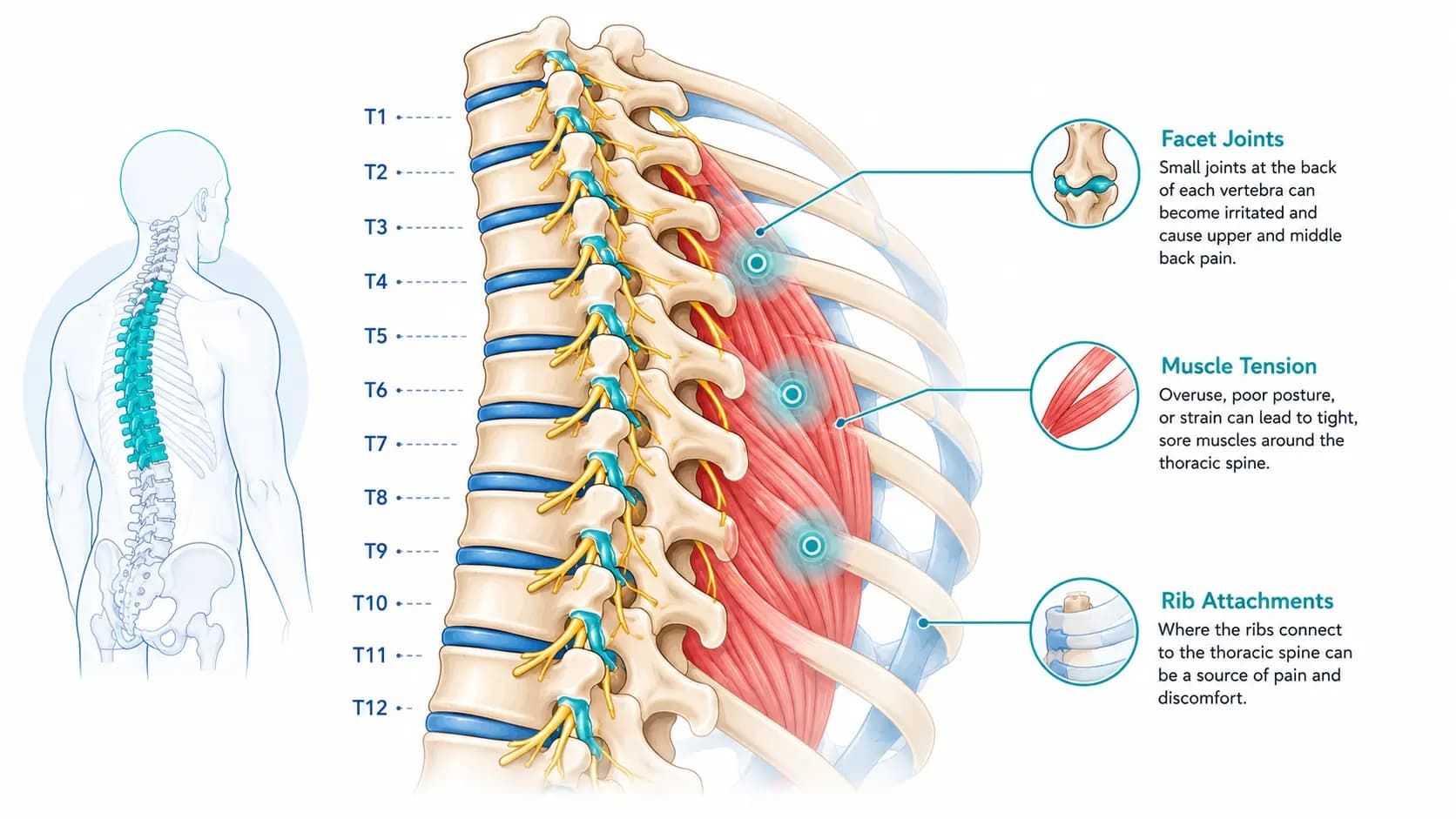
Upper and middle back pain is felt between the base of the neck and the bottom of the rib cage. The thoracic spine is more rigid than the cervical or lumbar regions because the ribs limit motion, which means pain in this area often reflects facet joint irritation, costovertebral joint dysfunction where the ribs meet the spine, postural strain, or referred patterns from the neck.
Patients often describe a band-like ache between the shoulder blades, sharp catches with deep breathing or twisting, and tightness that worsens late in the workday. Because the thoracic spine sits near the heart, lungs, and abdominal organs, our exam is also designed to rule out non-spinal contributors.
Treatment focuses on calming the inflamed structure, restoring thoracic mobility, and addressing posture and ergonomics so symptoms do not recur after the initial relief.
Mid-back pain usually improves with conservative care, but certain features should prompt earlier evaluation.
- Pain following trauma, especially in patients over 50 or with osteoporosis
- Pain associated with shortness of breath, chest pressure, or fever
- Progressive numbness or weakness in the legs
- Night pain not relieved by position change
What patients usually describe
- Aching or burning between the shoulder blades
- Sharp pain with deep breath, cough, or twisting
- Stiffness after long periods at a desk
- Tightness that radiates around the rib cage
- Knot-like trigger points in the upper trapezius and rhomboids
- Fatigue with sustained overhead reach
What we look for in evaluation
- Thoracic facet joint irritation
- Costovertebral or costotransverse joint dysfunction
- Postural overload and prolonged seated work
- Myofascial pain in the trapezius, rhomboids, or paraspinals
- Thoracic disc bulge or herniation (less common)
- Referred pain from the cervical spine or shoulder
Diagnosis comes before any procedure.
We use a focused exam to assess thoracic mobility, segmental tenderness, rib cage motion, and neurologic function. Imaging is reserved for cases where it would change the plan. Diagnostic injections may be used to confirm a facet or costovertebral source when conservative care has not produced relief.
Postural and movement assessment, neurologic screen, rib cage exam.
Targeted palpation and selective injections to confirm the source.
Combined interventional and conditioning plan with ergonomic guidance.
Treatments we offer for upper and middle back pain
Each option below is matched to a confirmed pain generator. We start with the least invasive effective approach and only escalate when the diagnosis supports it.
Your first appointment
Your first visit includes a thorough movement and posture assessment in addition to neurologic testing. Most patients leave with a working diagnosis, an initial care plan, and clear next-step options that fit insurance coverage.
What recovery typically looks like
Mid-back pain often responds within a few weeks once the right structure is treated. Long-term improvement depends on conditioning of the postural muscles, ergonomic adjustments, and follow-up to confirm response.
Conditions patients with upper and middle back pain often ask about
Questions about upper and middle back pain
Could my mid-back pain be coming from my neck?
Yes. Cervical spine problems frequently refer pain into the upper back and between the shoulder blades. Part of the exam is sorting out the true source.
Do I need an MRI for thoracic pain?
Often not at the first visit. We order imaging when red flags are present or when imaging would change the next-step plan.
How long do trigger point injections last?
Relief is variable. Many patients feel meaningful improvement within days, and the procedure is most durable when paired with conditioning.
Ready to find the source of your pain?
Share a few details and our team will reach out to confirm a time that works with your schedule and your insurance.
Request an appointment
Tell us about your upper and middle back pain symptoms and preferred clinic. We will confirm the next available appointment options.