Radiofrequency Ablation
Radiofrequency ablation uses controlled heat to interrupt pain-signaling fibers in a specific nerve, producing longer-lasting relief than a single injection can deliver.
RFA is typically considered after a successful diagnostic nerve block confirms which nerve is driving your pain — making it a precise, evidence-based next step rather than a first-line treatment.
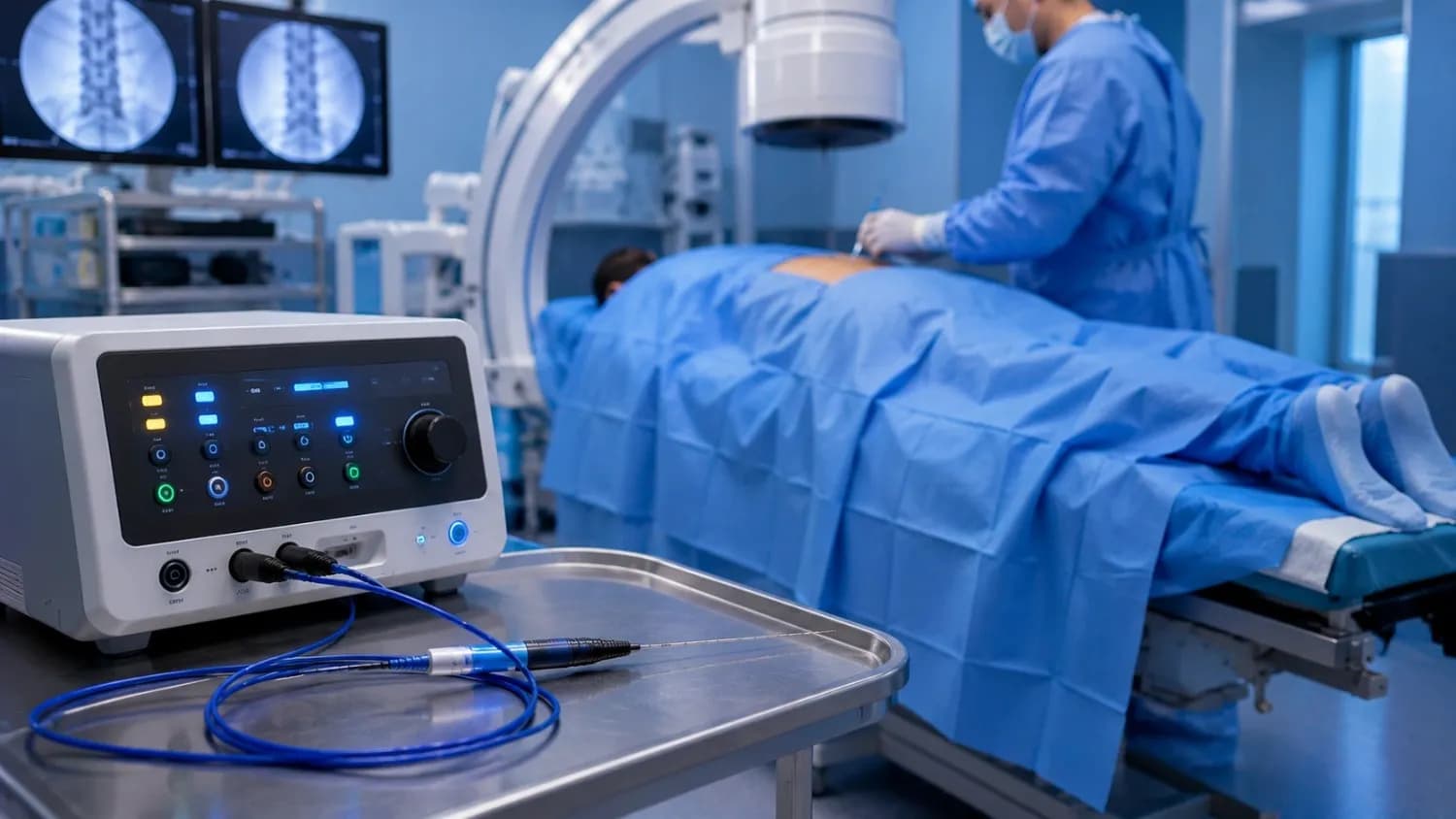
What this treatment is and why it is used.
Radiofrequency ablation (RFA) is a longer-acting interventional treatment for chronic pain driven by a specific, well-identified nerve. A specialized needle delivers controlled radiofrequency energy that produces a small thermal lesion on the target nerve, interrupting its ability to transmit pain signals.
Because RFA is a more durable intervention, it is generally reserved for patients whose diagnostic nerve block produced meaningful temporary relief. That confirmation tells us the right nerve has been identified before committing to the longer-lasting treatment.
Common indications include facet-joint mediated neck and back pain, sacroiliac joint pain, and select chronic peripheral nerve pain. The goal is durable relief that creates room for sustained rehabilitation and return to function.
Our team starts with a clinical evaluation to confirm the pain generator before any procedure.
The procedure, step by step.
Every step is designed for accuracy and comfort. You will know what to expect before, during, and after.
Successful temporary relief from a prior diagnostic nerve block confirms the target. RFA is typically not performed without that confirmation.
You are positioned on a fluoroscopy table and the skin over the target is sterilized.
Local anesthetic numbs the skin and deeper tissue along the needle path. Light sedation may be offered.
Specialized RFA needles are advanced to the target nerve under live X-ray guidance. Test stimulation confirms correct placement.
Controlled radiofrequency energy is delivered, producing a small thermal lesion that disrupts the nerve's pain-signaling fibers.
You are monitored briefly, given aftercare instructions, and discharged shortly afterward with a follow-up visit scheduled.
Before, during, and after the appointment.
You will receive instructions on medications to pause and fasting if sedation is planned. Bring a driver if sedation will be used. Confirm any blood thinner or recent infection history with our team.
After numbing, the physician uses fluoroscopy to position the needles. Test stimulation may briefly reproduce your familiar pain. The lesion itself is delivered over a short series of cycles.
Mild soreness at the procedure site is common for several days. Many patients notice progressive relief over the following weeks as the treated nerve fibers settle.
What recovery typically looks like.
Most patients return to light activity the next day. Avoid strenuous exercise for several days. Some report immediate relief; others notice the most improvement over the following two to four weeks. We typically reassess your response at four to six weeks and align next steps with your rehabilitation plan.
Candidacy is determined after a clinical evaluation.
Radiofrequency ablation is generally well tolerated, but it is reserved for carefully selected patients. Candidacy typically requires a successful diagnostic nerve block, supporting imaging, and an evaluation that includes your prior treatments, current medications, and overall health. We will discuss whether RFA is the right next step before scheduling.
Medicare and major insurance accepted.
Radiofrequency ablation is commonly covered by Medicare and major commercial insurance plans when supported by a successful diagnostic block and clinical indication. Our team verifies benefits, secures any required prior authorization, and reviews expected costs in advance.
See accepted insurance plansCommon pain patterns we pair with radiofrequency ablation.
Procedures that often work alongside this one.
Questions patients ask about this procedure.
Why do I need a nerve block first?
The temporary relief from a diagnostic block confirms which nerve is driving your pain. That confirmation is what makes RFA a precise, evidence-based step rather than guesswork.
How long does RFA last?
Many patients experience meaningful relief for six to twelve months. Duration varies by patient and target nerve. The procedure can often be repeated if pain returns.
Will I be sedated?
Light sedation is often offered for comfort, but the procedure can be performed with local anesthetic alone. We discuss the right approach for you in advance.
When can I return to work?
Most patients return to light desk work within one to two days. Heavier physical work may take a few additional days. We will tailor the timeline to your job and procedure site.
Talk to a board-certified pain specialist.
We see new patients by referral across our Pasadena, Baytown, and Katy clinics. Our team will verify your insurance and walk you through the next step.
- Board-certified, fellowship-trained physician
- Medicare and major insurance accepted
- Three Greater Houston locations
- Bilingual staff and direct phone access
Request a radiofrequency ablation consultation
Controlled heat that interrupts a confirmed pain-signaling nerve for longer-lasting relief than a single injection.