Spinal Cord Stimulation
Spinal cord stimulation uses electrical pulses to modulate pain signals in the spinal cord, offering meaningful relief for severe, persistent nerve pain that has not responded to other treatments.
Because SCS involves an implanted device, candidacy is carefully evaluated and the treatment begins with a trial. This test-drive period lets you experience the therapy firsthand before committing to a permanent implant, making it one of the most honest treatment decisions available.
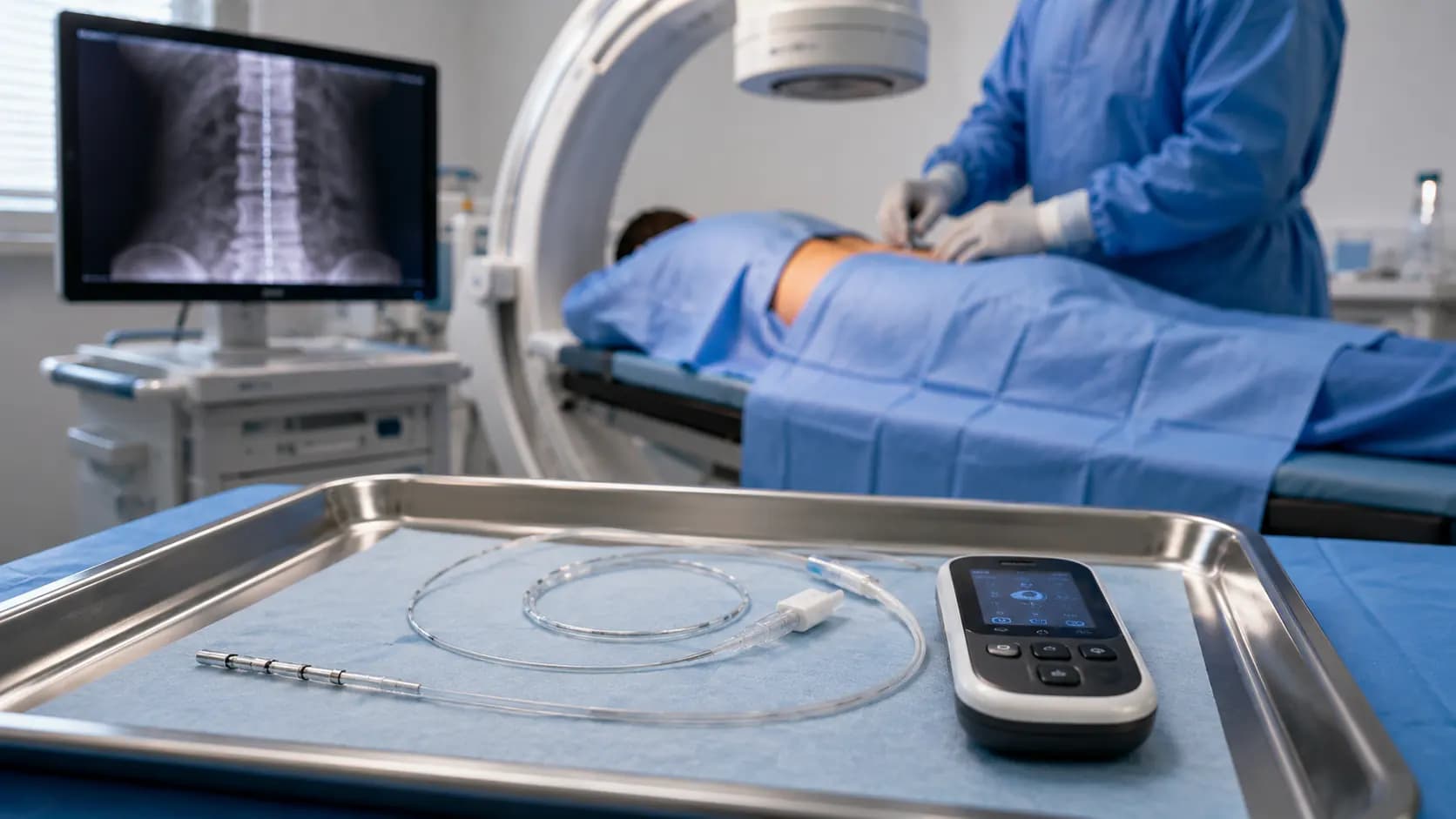
What this treatment is and why it is used.
Spinal cord stimulation is a device-based therapy reserved for patients with severe, chronic nerve pain that has persisted despite other interventional treatments, medications, and physical therapy. The device works by delivering gentle electrical pulses to the spinal cord in the epidural space, altering how pain signals reach the brain.
What distinguishes SCS from other treatments is its two-stage approach. The trial period—where temporary leads are placed and you wear an external generator at home—allows you to experience the therapy and confirm whether it produces meaningful relief before any permanent implant. This is the treatment's greatest strength: a genuine test-drive rather than a commitment in either direction.
SCS is most effective for patients with well-defined chronic nerve pain patterns, particularly radiating leg or arm pain, combined with realistic expectations and the psychological readiness for long-term device management. Careful patient selection and thorough candidacy evaluation are essential to the treatment's success.
Our team starts with a clinical evaluation to confirm the pain generator before any procedure.
The procedure, step by step.
Every step is designed for accuracy and comfort. You will know what to expect before, during, and after.
A detailed history, physical examination, review of prior treatments, and imaging confirm a candidate for SCS. Psychological evaluation assesses readiness for device-based therapy and addresses any concurrent depression, anxiety, or substance use concerns that should be optimized first.
Under local anesthesia and fluoroscopic guidance, thin temporary leads are placed percutaneously into the epidural space. Positioning is confirmed with test stimulation. Leads are connected to an external generator that you wear for five to seven days at home.
You track pain levels, functional changes (sleep, activity, medication needs), and how you tolerate the stimulation. The success bar is clear: meaningful, sustained pain reduction with functional improvement.
At the end of the trial, leads are removed in clinic if unsuccessful—no implant, minimal commitment. If the trial meets success criteria, permanent implant is scheduled at an affiliated surgical facility.
Permanent leads are positioned through a similar technique, and a small pulse generator about the size of a pocket watch is placed under the skin, usually in the upper buttock or flank. Most patients are discharged a few hours later.
The implant site is protected during the first few weeks as incisions heal. Once healed, programming begins to optimize pain relief. A handheld controller or phone app gives you control over intensity and programs.
Before, during, and after the appointment.
We review your complete medical history, current medications, and any bleeding or infection concerns. You will undergo a psychological evaluation to ensure you are ready for device-based therapy and to address any mental health concerns that should be optimized beforehand. Fasting and medication instructions are provided if trial or implant is scheduled.
For the trial, temporary leads are placed under fluoroscopy with local anesthesia. Test stimulation confirms position. You wear an external generator for five to seven days at home, adjusting intensity as needed and tracking your pain and function. For implant, the procedure is performed at an affiliated surgical center with local anesthesia, sedation, or general anesthesia based on your preference and medical needs.
After trial lead removal, if unsuccessful, you return to your prior pain management plan. If the trial succeeds and a permanent implant is placed, you protect the incision site for several weeks. Avoid heavy lifting, twisting, and overhead reaching during early healing. Most patients return to normal activity by six to eight weeks and notice progressive optimization as programming is refined.
What recovery typically looks like.
Recovery from permanent implant placement typically takes four to six weeks for full incision healing. Many patients experience improved sleep and activity tolerance within the first weeks as the stimulation is optimized. Routine follow-up visits focus on fine-tuning programs and confirming device function. A handheld controller or smartphone app provides ongoing control. Inform all healthcare providers about your device, and confirm MRI compatibility before any imaging procedures.
Candidacy is determined after a clinical evaluation.
Spinal cord stimulation is reserved for carefully selected patients with severe chronic nerve pain that has not responded to other interventions. Candidacy evaluation includes a detailed history, physical exam, imaging review, and psychological assessment. Untreated depression, uncontrolled anxiety, and active substance use disorder are not reasons to exclude patients—these conditions are addressed and optimized as part of our pain management program. Relative contraindications include active infection, uncontrolled bleeding disorders, and inability to attend follow-up care. Risks, though uncommon, include infection, lead migration, device malfunction, and lead-related complications. The trial period helps ensure a good fit before any permanent commitment.
Medicare and major insurance accepted.
Spinal cord stimulation trial and implant are commonly covered by Medicare and major commercial insurance plans when medical-necessity criteria are met, appropriate imaging and prior treatments are documented, and a successful trial has been completed. Prior authorization is typically required. Our team will verify benefits, obtain any necessary authorizations, and discuss expected costs in advance.
See accepted insurance plansCommon pain patterns we pair with spinal cord stimulation.
Procedures that often work alongside this one.
Questions patients ask about this procedure.
Why is the trial period so important?
The trial lets you experience the device and determine whether it truly works for your pain and lifestyle before committing to a permanent implant. It is one of the most patient-friendly aspects of SCS because you get a real-world test rather than a guess.
What if the trial doesn't work?
If the trial does not produce meaningful relief, the temporary leads are removed in clinic. There is no implant, no surgical scar, and you return to your prior pain management plan. Unsuccessful trials protect you from unnecessary implantation.
Will I feel the device stimulating my spinal cord?
Modern SCS systems offer multiple waveforms. Some produce a gentle tingling sensation you can feel; others work silently in the background without perceptible sensation. Your physician discusses the right approach for you during programming.
Can I have an MRI with a spinal cord stimulator?
MRI compatibility varies by device. Some newer systems are MRI-compatible under specific conditions; others are not. Always inform any healthcare provider that you have a stimulator, and confirm device compatibility before scheduling any imaging.
Talk to a board-certified pain specialist.
We see new patients by referral across our Pasadena, Baytown, and Katy clinics. Our team will verify your insurance and walk you through the next step.
- Board-certified, fellowship-trained physician
- Medicare and major insurance accepted
- Three Greater Houston locations
- Bilingual staff and direct phone access
Request a spinal cord stimulation consultation
Neuromodulation for severe, persistent nerve pain — trialled first with temporary leads, implanted only if the trial works.